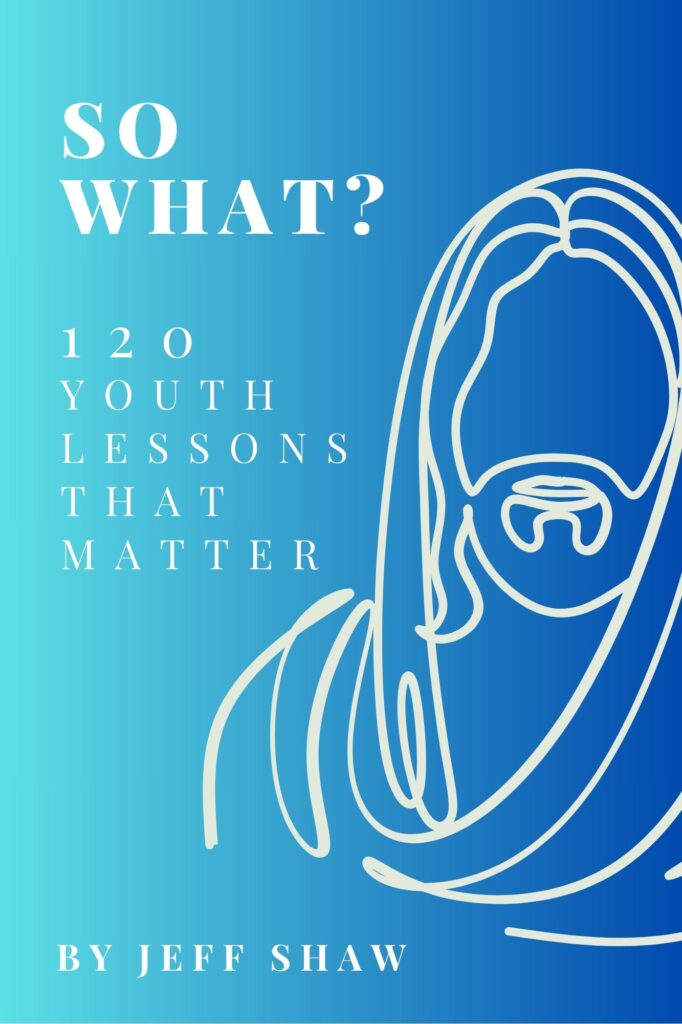
So What?
120 Lessons for Youth and Small Group Studies
After more than twenty years of working with young people, I accumulated lessons, discussions, questions, and ideas that worked in real groups with real students.
So What? brings 120 of those lessons together in a practical resource for anyone leading youth or small-group discussions.
Each lesson is designed around a simple question:
So what does this mean for my life?
The goal isn’t simply to teach information. It’s to help turn a topic into a conversation—and a conversation into something that matters beyond the meeting.
Built From Years of Teaching
So What? grew out of more than twenty years of volunteer youth teaching. These aren’t lessons created simply to fill a book. They developed from preparing week after week, sitting with middle- and high-school students, asking questions, leading discussions, and learning what actually gets young people involved.
Over time, I found that a lesson became much more meaningful when it didn’t end with what happened, what someone said, or what a passage meant.
It needed one more question:
So what?
What does this have to do with me?
What should I think about differently?
What should I actually do with it?
That became the idea behind the book.
What You’ll Find Inside
So What? contains 120 one-page lessons organized into a collection designed to make preparation simple and discussion practical.
The lessons cover a wide range of topics relevant to young people and small groups, with each one built to move beyond simply presenting information. The goal is to create discussion, encourage thought, and bring the lesson back to the question that matters:
So what does this mean for my life?
Because each lesson stands on its own, leaders can choose a topic that fits the group, the situation, or the conversation they want to have that week.
A Resource You Can Actually Use
This book was created for the person who needs to lead a group but doesn’t necessarily have hours to prepare.
It can be used by youth leaders, small-group leaders, teachers, volunteers, or anyone looking for a practical starting point for a meaningful discussion.
Choose a lesson. Read through it. Make it your own. Then use the questions and ideas to get people talking.
You don’t have to follow every word exactly. The lessons are there to give you a foundation—and let the conversation grow from there.